
Control Pendant Labels: Control Voltage vs. Rated Voltage
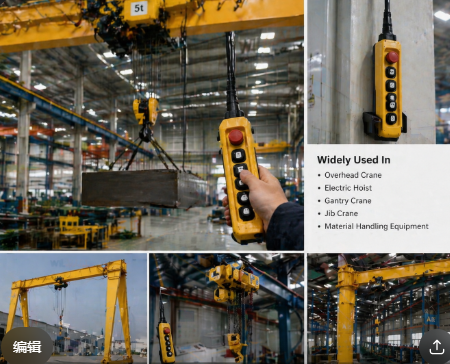
Two voltage figures appear in the paperwork for almost every crane pendant, and they are routinely read as though one of them must be the real voltage of the device. On the Wilmall COP-5MSS-DD push button pendant the marked figures are AC 500 V and 10 A. In the same supplier data, the control voltage of the YJ02-02 electric chain hoist is listed as 24–48 V.
Both figures are correct, and neither replaces the other. The 500 V / 10 A pair is a contact rating: a capability limit for the circuits the pendant's switching elements may be connected to. The 24–48 V figure describes the low-voltage control circuit that the buttons actually command. Getting that distinction right changes the questions a buyer asks at quotation stage, and it stops a serviceable pendant from being rejected as the wrong voltage for a job.
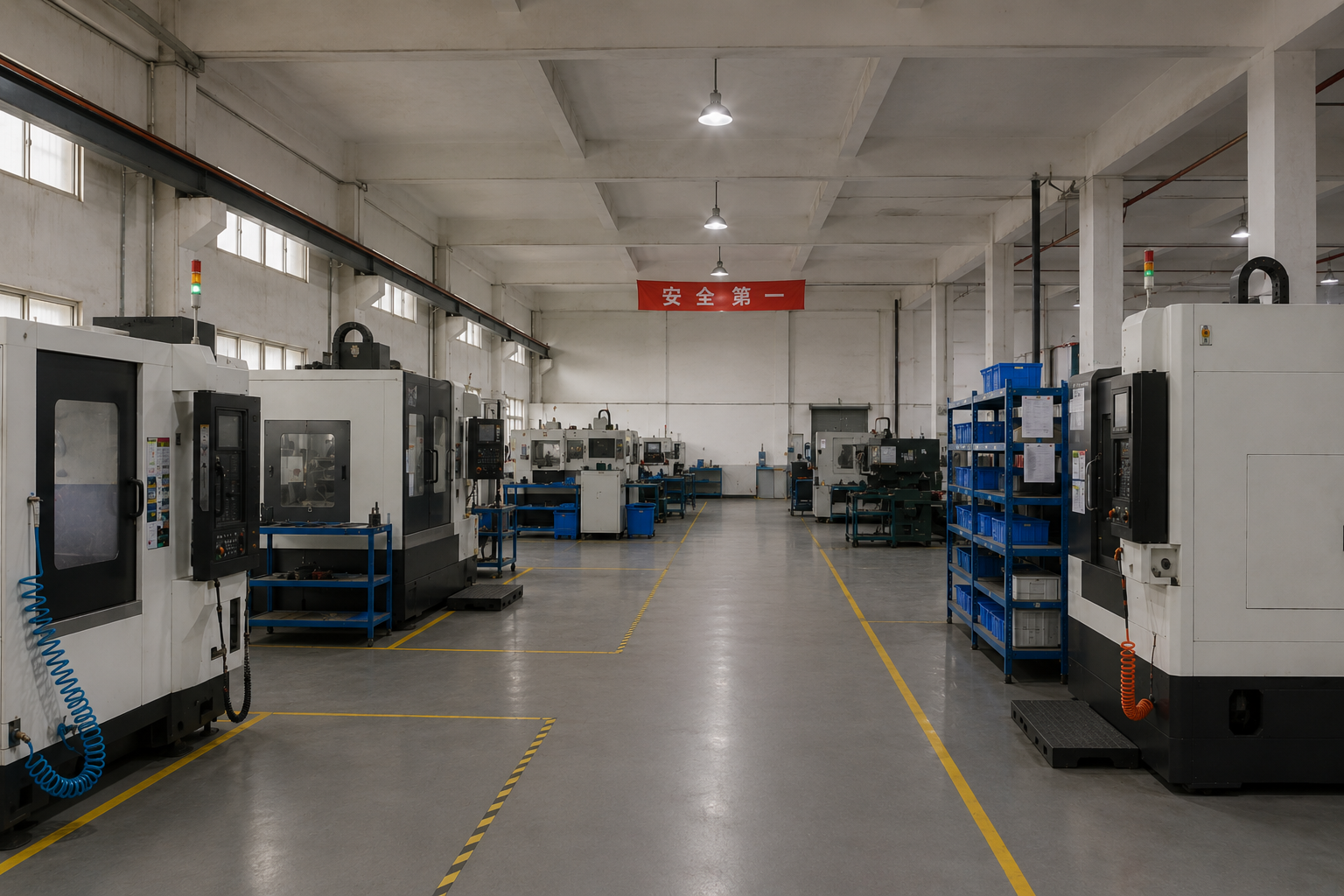
Wilmall (Wenzhou Mofan Electric Technology Co., Ltd.) manufactures industrial automation and power distribution components, with control pendant stations among its main products. The company reports a 2,000 m² production facility, 200,000 units of annual capacity and a three-engineer R&D team, and states it has served more than 500 customers across 30+ countries, with exports at 80% of sales and Pakistan, Korea, Australia and Malaysia among its major markets.
The short answer: capability versus circuit
Rated voltage and rated current describe what the pendant's contact blocks can switch. Rated voltage is the circuit voltage those contacts are rated for; rated current is the current they are rated to carry or switch. Control voltage describes the signal circuit the contacts sit in — the low-voltage path between a button and the machine's control panel.
For the COP-5MSS-DD the capability figures are AC 500 V and 10 A. For the YJ02-02 hoist the control voltage is 24–48 V. A 24–48 V control circuit therefore sits well inside a 500 V / 10 A contact rating. That comparison describes electrical margin, not a compatibility guarantee: the pendant still has to match the machine's control design, which is a separate check covered below.
| Dimension | Rated voltage / rated current | Control voltage |
|---|---|---|
| What it describes | The switching capability of the pendant's contact blocks | The operating band of the signal circuit the buttons switch |
| Figure in the supplied data | AC 500 V, 10 A for the COP-5MSS-DD | 24–48 V listed for the YJ02-02 hoist control circuit |
| What it constrains | The circuits the contacts may be connected into | The control side of the machine the buttons command |
| Typical misreading | “This pendant runs at 500 V” | “This pendant is a 24–48 V device” |
| What to verify | Utilization category and datasheet detail | Your machine's actual control-circuit or coil voltage |
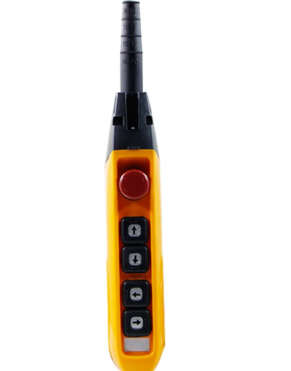
What rated voltage and rated current actually describe
A rated voltage is a ceiling, not a description of normal operation. AC 500 V tells an electrician that the contact block may be connected into circuits up to that voltage, and 10 A that it is rated for that current. It does not mean the pendant sits at 500 V in service, and it says nothing about the coil voltage of any contactor downstream.
Reading AC 500 V, 10 A correctly
Two numbers alone do not describe switching duty. IEC 60947-5-1:2024, the current edition of the IEC standard for control circuit devices and switching elements, published 26 March 2024 (source: IECEE), sorts these devices by utilization category according to the load they switch. Where a specification is quoted as a bare voltage and current pair, the datasheet entry and utilization category are worth requesting, because they describe how the contact is expected to behave in service. The point matters most where a pendant switches a load directly rather than signalling a contactor.
What the rating is not
The contact rating says nothing about enclosure protection, ambient limits or mechanical wear. Those sit on separate lines of the same specification — IP65 and a –25 °C to +40 °C range on this model — and folding them into the voltage conversation is where selection errors begin. A pendant rated AC 500 V is not automatically suitable for a wet site, and a pendant built for a wet site is not automatically compatible with a 48 V control circuit.
What a control voltage range describes
Control voltage describes the circuit the buttons operate, not the circuit the motor runs on. The sequence in the supplied application data is short: the operator presses the corresponding button (up, down, forward or backward), the button's internal contacts close, a control signal reaches the equipment's control circuit, and the control system — a contactor or a drive — executes the movement.
Why a band rather than a single number
A range of 24–48 V says the control side is designed to work somewhere inside that band. It is not a setting the operator selects, and it does not mean the pendant converts voltage: the pendant closes the circuit it is wired into. What the buyer has to confirm is the actual control-circuit or coil voltage of the machine, and that the pendant's rating covers it with margin. On a 24–48 V control circuit the margin against a 500 V contact rating is large, but margin is not proof of compatibility with any particular panel design.
Why manual push-button control runs at 24–48 V
A pendant is held in the operator's hand for a whole shift, hangs from a flexible cable and is used close to moving loads. Keeping the button circuit at low voltage limits the potential that can appear at the grip if a cable or a contact is damaged, while the power switching itself happens in the panel through contactors or a drive. In the YJ02-02 data that separation is visible inside one specification: 110–480 V rated voltage on the supply side, 24–48 V control voltage on the signal side.
That is general industrial practice, and it comes with boundaries. The protective measures that make a low-voltage control circuit effective — earthing and bonding, insulation, cable routing and protective devices — are set by the applicable installation standard, local electrical rules and the hoist manufacturer's wiring instructions. A pendant label is no substitute for those documents, and a low control voltage does not make them optional.
Where the five buttons and the emergency stop fit
The COP-5MSS-DD is a five-button handheld control station with an emergency stop, intended for crane, hoist, lifting equipment and industrial control applications. It is operated by manual push-button control: each button closes its own contact in the control circuit. Motion is produced by the hoist's control system; the pendant is the interface.
The motion buttons
One of the five buttons is the emergency stop, and the remaining buttons carry the motion commands, with up, down, forward and backward used as the example in the supplied application description. Button function assignment and legend should be confirmed on the drawing you approve rather than inferred from the model code, because a legend mismatch is invisible on a specification sheet and obvious on the shop floor.
The emergency stop is a machine-level function
Whether the stop button interrupts the control circuit directly, drops a main contactor, or does both depends on how the machine's control circuit is designed and on the hoist manufacturer's wiring diagram. The pendant supplies the operator control; the stop function itself belongs to the machine. Ask for the wiring diagram that shows what the emergency stop interrupts, and do not treat the pendant alone as evidence that a particular stop category or safety performance level has been achieved.
The rest of the practical envelope
Voltage is only part of a pendant specification. The remaining lines describe where the unit may be used, and for a buyer new to the category they carry as much weight as the rating.
Plastic handheld station
The housing material for the COP-5MSS-DD is listed as plastic, in a handheld station format. The supplied data does not state an impact or drop rating, so a site with rough handling should raise that question directly rather than infer robustness from the material name.
IP65 in practice
The referenced industrial automation application calls for IP65 protection, which means dust-tight construction with protection against water jets — not protection against immersion. The stated working conditions add rain intrusion to the permitted environment, which points to sites where rain reaches the equipment but the pendant is never submerged.
Temperature, humidity and atmosphere
The stated working conditions are an ambient temperature of –25 °C to +40 °C, humidity of 90% at an average ambient of +40 °C with rain intrusion tolerated, and an environment with no explosion hazard and no media that would corrode metal, damage rubber or attack insulation through gas or liquid. Those exclusions are real limits rather than fine print: a corrosive or hazardous-area site sits outside the stated conditions and needs a different specification discussion.
| Stated item | Value in the supplied data | Why it matters when specifying |
|---|---|---|
| Housing material | Plastic | Handheld station; ask separately about impact expectations |
| Protection | IP65 (required in the referenced application) | Dust-tight plus water jets; not an immersion rating |
| Ambient temperature | –25 °C to +40 °C | Outside this band the stated conditions no longer apply |
| Humidity | 90% at an average ambient of +40 °C, rain intrusion tolerated | Suits humid, wet-but-not-submerged sites |
| Atmosphere | No explosion hazard, no corrosive gases or liquids | Excludes corrosive and hazardous-area installations |
Supply-side figures on the paired hoist
The YJ02-02 electric chain hoist is listed with a 2,000 kg rated capacity, 4 m lifting height, 4 m/min lifting speed, 1.1 kW rated power, 1,440 r/min rotation speed, 110–480 V rated voltage, 24–48 V control voltage, 3/2 phases, a working rating of M5 and a net weight of 45/48 kg. It is built around a high-performance motor, a reducer and a compact electronic control system.
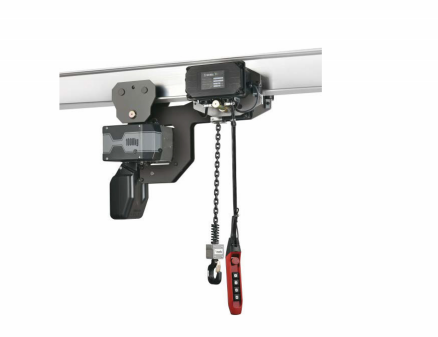
Read the supply figures as belonging to the hoist. The 110–480 V range and the 3/2 phase entry describe the power side and the configurations covered by the model's specification; the 24–48 V entry is the control side in which the pendant's buttons work. Confirm the exact phase and supply configuration for your site before ordering, because the pendant's contact rating says nothing about it. The M5 working rating likewise belongs to the lifting equipment specification, not to the pendant.
The pairing is where most of the confusion resolves: a 24–48 V control circuit on the hoist, a 500 V / 10 A contact rating on the pendant, and a plastic IP65 station with a five-button layout and an emergency stop in between. Three different statements describing one installation.
What these two numbers do not tell you
- The coil voltage of the contactors in your panel, and therefore whether the control circuit runs at 24 V or 48 V in practice.
- Voltage drop across a long pendant cable, which depends on cable length and conductor size rather than on the pendant rating.
- What the emergency stop interrupts and how the machine's stop function is structured.
- Whether the unit suits conditions beyond IP65, –25 °C to +40 °C and the stated atmosphere.
- Button legends, colours and language, which belong on the approval drawing.
- Market access: IEC 60947-5-1:2024 is the device standard, but meeting a specific country's requirements is a separate question to put to the supplier in writing.
- Customs treatment. Industrial control stations are typically classified under HS 8537.10 or 8536.50 (source: USITC Harmonized Tariff Schedule), and your broker should confirm the code for the actual configuration.
A short verification checklist for first-time buyers
Working through these steps in order answers the voltage question without guesswork:
- Read the control-circuit voltage from the machine's wiring diagram, or measure it at the control terminals — not from the pendant label.
- Compare it with the control band stated for the hoist; the YJ02-02 data gives 24–48 V.
- Check that the pendant's rating covers that circuit: AC 500 V and 10 A on the COP-5MSS-DD.
- Match the environment: IP65 where dust and water jets are present, –25 °C to +40 °C ambient, 90% humidity at a +40 °C average, and no explosive or corrosive media.
- Request the datasheet, the utilization category and the wiring diagram showing what the emergency stop interrupts.
- Confirm the five-button layout, the function of each button and the legend on the approval drawing.
- Confirm the HS code for the configuration with your customs broker.
- Bench-test one unit against the wiring diagram before committing to a repeat order.

The company catalogue, which covers the control pendant range alongside other industrial electrical products, can be downloaded here: Wilmall product catalogue (PDF).
FAQ
Is AC 500 V the voltage the pendant runs at?
No. AC 500 V is the rated voltage of the COP-5MSS-DD's contact blocks, paired with a 10 A rated current. It defines the circuits those contacts may be connected to, not the voltage present in normal service. The pendant is normally used in a low-voltage control circuit; in the YJ02-02 hoist data that circuit is 24–48 V.
Why is the pendant marked 500 V when the hoist control voltage is 24–48 V?
Because the two numbers describe different layers. The contact rating is a capability limit for the switching element; the control voltage is the operating band of one specific control circuit. The supplied data does not state why a particular contact rating was selected, and it does not need to. What matters is that the pendant's rating covers your machine's control circuit and that the panel design matches — confirm the machine's voltage at the terminals rather than inferring it from either figure.
What information should I send with a quotation request?
The machine's control-circuit or coil voltage, the supply voltage and phase configuration of the hoist (the YJ02-02 data lists 110–480 V and 3/2 phases), the button count and functions (five buttons with an emergency stop on this model), the required IP rating (IP65 in the referenced application), the site's ambient temperature and humidity, the atmosphere (no explosion hazard, no corrosive media), and whether the order is a new build or a replacement. Those inputs decide which line of the specification actually governs the choice.
Can I check a unit before ordering in volume?
Ask Wilmall directly whether a sample is currently available, using sales@wilmall.com or +86 19730226757. A bench check should cover fit and cable entry, button action and legend, and the emergency stop's contact behaviour against the supplied wiring diagram. Testing one unit first is the practical way to catch a control-voltage or legend mismatch while it is still simple to correct.
What should be confirmed in writing before the order is placed?
Model, button layout and legend, rated voltage and current, control-voltage compatibility with your machine, IP rating, ambient range, and the wiring diagram covering the emergency stop. For the COP-5MSS-DD that means AC 500 V, 10 A, a five-button plastic station with emergency stop, IP65 in the referenced application and an operating range of –25 °C to +40 °C. The catalogue can be downloaded from the link above, and further questions can go to sales@wilmall.com as the next step.
Conclusion
Rated voltage and control voltage answer different questions, and both have to be read on a crane pendant. AC 500 V and 10 A describe what the COP-5MSS-DD's contacts can switch; 24–48 V describes the control circuit in which its buttons do the work on equipment such as the YJ02-02 hoist. Neither number substitutes for the other, and neither is a complete specification on its own — IP65, the –25 °C to +40 °C range and the atmospheric exclusions decide whether the unit belongs on your site at all.
For a buyer at the research stage, the sequence is short: read the machine's control voltage, check it against the hoist data, confirm the pendant's rating covers it, then verify the environment, button layout and wiring diagram in writing. That resolves the voltage question in minutes and keeps the rest of the specification in view.
Have Questions or Need More Details?
Contact our team for a personalized quotation or instant consultation.
Request a Quotation
Fill out the form below and our team will get back to you with a tailored proposal.
WhatsApp Direct Chat
Prefer to chat in real-time? Message us on WhatsApp for instant assistance & quick answers.
- Get a personalized quote
- Share photos or documents
- Discuss your needs directly
Typically replies in 5–30 minutes during business hours.