
Ranking Control Pendant Selection Priorities for Crane, Hoist, and Warehouse Buyers
When 5-button pendant buyers rank requirements in order of consequence, the sequence is: (1) push-lock emergency stop, (2) IP65 ingress protection, (3) voltage and current rating, (4) button layout matched to machine functions, and (5) maintenance access. Unit price is not a priority in that list — it is the output of it. Wilmall's COP-5MSS-DD is a concrete reference for the five priorities: five buttons with a push-lock emergency stop, AC 500V/10A, IP65 protection, and an operating envelope of -25°C to +40°C at up to 90% humidity.
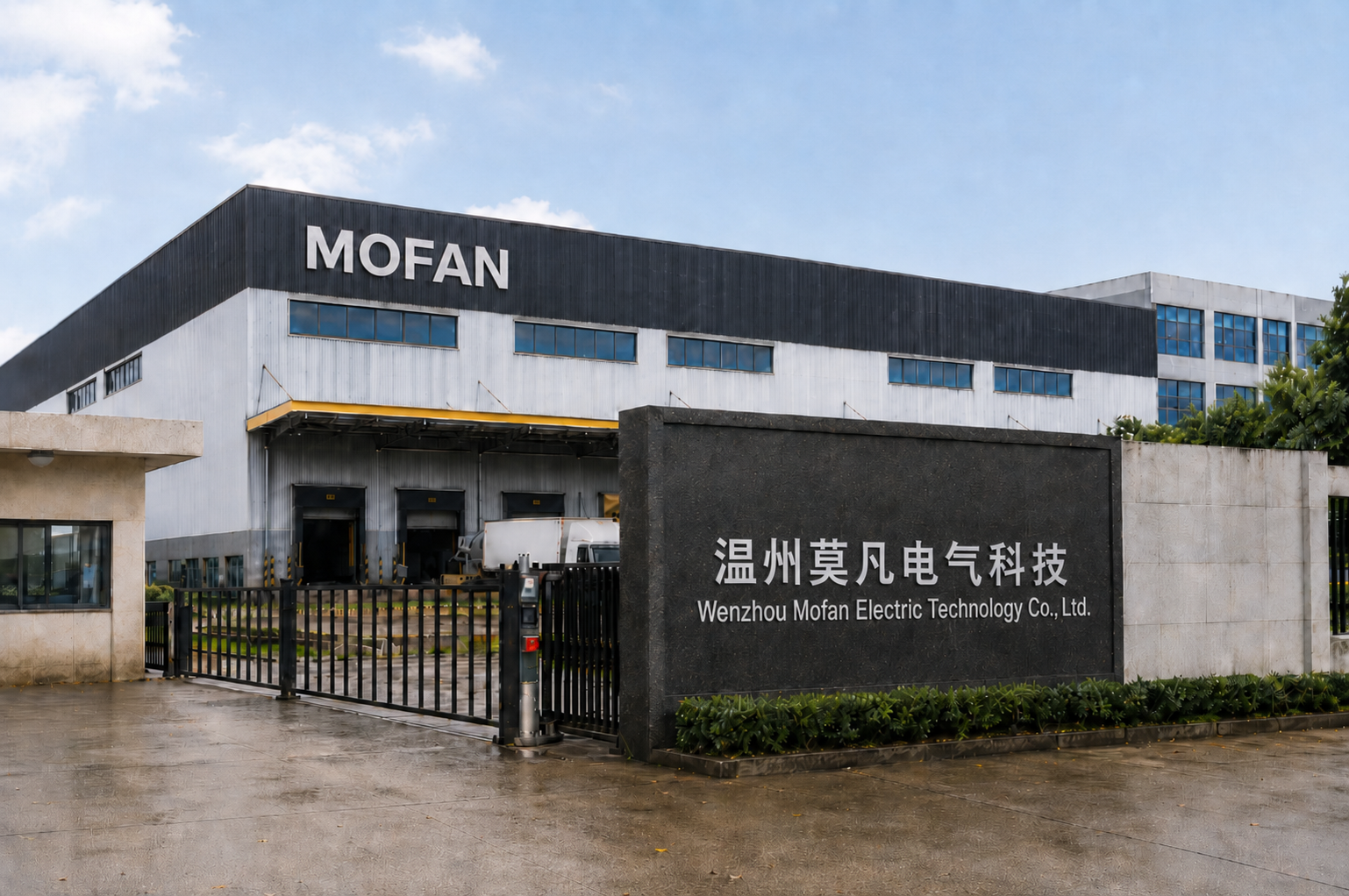
Wilmall manufacturing base — the supplier and production environment behind the COP-5MSS-DD 5-button pendant station referenced throughout this ranking.
Problem Definition: The Comparison a 5-Button Pendant Buyer Is Actually Making
Two pendant stations can share the same housing shape, the same five buttons and the same cable length, and still behave very differently after six months on a crane runway. The attributes that are easy to compare are quoted in every catalogue; the attributes that decide uptime sit further down the datasheet or are missing entirely.
Five mismatches account for most of that gap across crane, hoist and warehouse applications:
- Emergency stop type. A momentary push button releases as soon as the operator lets go; a push-lock device latches and holds the stop condition. Buyers who compare only whether an E-stop exists miss the difference that matters.
- Ingress protection. A station rated for a dry cabinet shop and one rated for a humid warehouse can look identical from the outside.
- Switching rating. A station rated below the control circuit in use can pass a bench test and still fail under repeated switching.
- Button layout. Five buttons can be mapped to machine functions in more than one way; the wrong map is a specification that is technically correct and operationally wrong.
- Service access. Stations that need battery or pairing maintenance add tasks the maintenance team never planned for.
Price per unit then becomes a consequence rather than a criterion. Once the five priorities are fixed, quotations become comparable line by line, and the cheapest compliant offer is genuinely the cheapest. Before that point, a lower price usually means one of the five has been silently downgraded.
The wireless question belongs here too. A wireless crane remote control replaces the cable with a transmitter and receiver set, which also brings RF pairing and battery dependency into the maintenance scope. A wired 5-button station removes both, at the cost of tying the operator to the cable's reach. Neither architecture is universally better; the decision is about which failure mode the site can absorb.
Industry Background: Where Specification Depth Still Differentiates Supply
The global push button pendant control station market was valued at USD 1.02 billion in 2025, and published projections put it at USD 1.48 billion by 2034 at a compound annual growth rate of 4.1% (market research consolidated in a 2026 industry data package, source SRC-0001). The same source reports that the top five players held more than 45% of the market in 2025.
Two reference points frame every quotation. IEC 60947-5-1:2024 is the current edition of the international standard for electromechanical control circuit devices and switching elements, and it applies to pendant switches. For customs purposes, industrial control pendant stations are typically classified under HS code 8537.10 for boards and panels up to 1,000 V, or 8536.50 for other switches.
The reading for buyers is that housings and button counts are broadly interchangeable, while the differences that survive field service concentrate in ingress rating, switching capacity, layout, and how much of the station can be customized. That is where a procurement comparison should spend its attention.
Wilmall (Wenzhou Mofan Electric Technology Co., Ltd.) is an industrial electrical manufacturer and one-stop B2B supplier based in Yueqing City, Wenzhou, China, producing control pendant stations alongside proximity sensors, rotary encoders, connectors, transformers and control devices. The company reports 8+ years of industry experience, a 2,000 m² facility, annual output of 200,000 units, an in-house engineering team of three, and exports to more than 30 countries, and it operates as manufacturer, supplier, wholesaler and OEM/ODM factory. Product information is published at wilmall.com.
Detailed Solution: The Ranked Priority Model for 5-Button Pendants
The ranking below orders requirements by the cost of getting them wrong, not by the cost of the part. A station that fails a safety requirement is out of service and possibly out of compliance; a station that fails an environmental requirement often fails as a batch, because bulk buyers purchase one configuration for many machines.
Priority 1 — Push-Lock Emergency Stop
Emergency stop ranks first because it is the only item on the list whose failure mode is a safety event rather than a downtime event. A push-lock device latches when actuated and stays engaged until it is deliberately released, so the stop condition persists even if the operator releases the button, the cable is pulled, or the panel takes vibration.
Wilmall treats emergency stop failure as a named risk and specifies push-lock emergency stop as the control method on its industrial hoist control stations for cranes, lifts and hoisting equipment, which also carry IP65 protection and durable housings. The stations are supplied factory-direct with OEM/ODM customization, wholesale terms and remote technical guidance.
Verification at quotation: confirm that the emergency stop is push-lock rather than momentary, that the contact arrangement is documented in writing, and that the stop device is additional to the five control buttons rather than counted as one of them.
Priority 2 — IP65 and the Site Environment Envelope
IP65 designates dust-tight construction with protection against water jets from any direction. That rating decides whether a station survives a humid warehouse, a washdown area, a dusty handling bay, or an outdoor crane runway that is roofed but not sealed.
COP-5MSS-DD is specified at IP65, with an operating envelope of -25°C to +40°C and tolerance of 90% relative humidity. Those three numbers are more useful than an IP badge on its own, because they define a range the buyer can check against the site record rather than against a supplier's confidence.
Verification at quotation: compare the site's summer and winter extremes and its typical humidity against the stated envelope. If a site runs outside -25°C to +40°C, or holds condensation above 90% relative humidity for long periods, the standard unit should not be assumed suitable — that is a question for the supplier, not an assumption for the order.
Priority 3 — Voltage and Current Rating
COP-5MSS-DD is rated AC 500V, 10A. The rating is checked in two directions: the station's rated voltage must cover the control circuit it is installed on, and its current rating must cover the load it switches. A station that matches the circuit on paper but carries no margin shows contact wear earlier, and worn contacts are the kind of fault that appears intermittently before it appears at all.
Buyers should also keep two voltages separate in the request for quotation: the rated voltage of the station and the control voltage of the circuit it operates. Fleet buyers gain a further benefit from a single rating that covers several machine types, because it reduces the number of stock-keeping units and the number of spare configurations the maintenance team must hold.
Priority 4 — Button Layout and Machine Function Mapping
COP-5MSS-DD provides five buttons in addition to the push-lock emergency stop, so the layout decision is really a mapping decision: every button corresponds to one machine function, and that mapping is agreed before the order is placed. Function assignment, legends and labelling are settled at quotation, which is also where OEM/ODM customization is confirmed.
Layout errors are the most common form of a station that is correct on paper and wrong in the operator's hands. Glove use, single-hand operation and the direction conventions of the specific crane all influence which arrangement reduces mis-operation, and none of them can be inferred from a generic catalogue image.
Priority 5 — Maintenance Access and Failure Points
Maintenance on a wired station is inspection work: cable, buttons, emergency stop and contact blocks. There is no battery to replace and no wireless pairing to restore, which removes two recurring tasks and two potential points of failure from the maintenance calendar. Wilmall's product documentation describes the wired design in the same terms — no RF pairing or battery dependency, and therefore fewer potential points of failure.
For wholesale and bulk buyers this becomes a parts-list decision. Stocking contact blocks, emergency stop elements and cable assemblies alongside the stations is cheaper than holding complete spare units, and it is only possible when the station's serviceable items are known at the time of purchase.
Step-by-Step Breakdown: A Five-Step Buying Sequence
The ranking converts into five steps, each producing one document the buyer can hold a supplier to.
- Build the function map. List every machine function the station must control and assign each one to a button of the five; record the label for each. Output: a button map.
- Fix the electrical interface. State the circuit's control voltage and the load being switched, then compare with the station's AC 500V/10A rating. Output: a rating check line in the RFQ.
- Set the environment envelope. Record site dust, water exposure, temperature extremes and humidity, and compare with IP65, -25°C to +40°C and 90% relative humidity. Output: a site-condition statement.
- Lock the safety requirement. Specify push-lock emergency stop and require the contact arrangement in writing. Output: a safety line item that cannot be substituted silently.
- Close on maintenance and quantity. Agree the serviceable items, the spare parts list, and whether the order is a single unit, a project batch or a wholesale quantity. Output: a spares plan and an order quantity.
Steps one to four are specification steps and cost nothing to complete; step five is where the commercial decision is made. A buyer who reaches step five with four completed documents can compare quotations on identical scope, and can see immediately which offer has downgraded a priority.
Use Cases: Where the Ranking Holds and Where It Shifts
COP-5MSS-DD is intended for cranes, electric hoists, lifting systems, workshop machinery and warehouse handling equipment. Across those settings the five priorities keep the same order, but the emphasis shifts.
- Warehouse handling and overhead cranes. Dust, humidity and intermittent water exposure make IP65 the second decision, immediately after the emergency stop. A crane that stops mid-cycle blocks an aisle, so environmental failure is a throughput event as well as a repair event.
- Electric hoist workstations. A single operator repeats the same motion thousands of times, which puts the button map and the switching rating ahead of the other priorities. Layout errors here show up as mis-operation, not as faults.
- Workshop machinery and lifting systems. Mixed machine types put a premium on maintenance access and on a rating that covers more than one circuit, so the spares plan carries more weight.
- Wholesale and distributor stocking. The deciding factor becomes system complexity. Compared with a transmitter and receiver remote control set, a wired station is simpler, which produces a cost advantage that matters at bulk quantity — and the absence of batteries and RF pairing simplifies after-sales support for a distributor.

Wilmall factory warehouse. Bulk and wholesale buyers purchase one configuration for many machines, which is why an environmental or safety mismatch tends to arrive as a batch rather than as a single failure.
Comparison Table 1: Wired 5-Button Station vs Wireless Crane Remote Control
| Comparison dimension | Wired 5-button pendant station (COP-5MSS-DD) | Wireless crane remote control |
|---|---|---|
| System architecture | Wired 5-button local control with emergency stop | Transmitter and receiver set |
| RF pairing | None required | Part of the system |
| Battery dependency | None | Part of the system |
| Switching specification | 5 buttons plus emergency stop; AC 500V, 10A; IP65 protection | Not covered by this comparison |
| Best fit | Cranes, electric hoists, lifting systems, workshop machinery, warehouse handling equipment | Not covered by this comparison |
| System complexity and cost | Lower complexity than a transmitter and receiver set; suitable for bulk or wholesale purchase | Higher system complexity (transmitter and receiver) |
| Maintenance scope | Inspect cable, buttons, emergency stop and contact blocks; no battery or wireless pairing maintenance | Battery and wireless pairing maintenance are in scope |
| Energy efficiency | No direct energy-efficiency difference; this is a control device, not a motor power-saving device | Same — no direct energy-efficiency difference |
Read the table as an architecture comparison, not a product ranking. The wired column describes COP-5MSS-DD specifically; the wireless column describes the transmitter-and-receiver category at the level of system structure, so entries marked as not covered reflect the scope of this comparison rather than absence of a feature.
Comparison Table 2: The Five Priorities at a Glance
| Rank | Requirement | What the buyer verifies | Why it ranks here | COP-5MSS-DD reference |
|---|---|---|---|---|
| 1 | Emergency stop type | Push-lock latch action; contact arrangement in writing | Failure is a safety event, not a downtime event | Push-lock emergency stop |
| 2 | Ingress and environment | IP65 against site dust and water; -25°C to +40°C; 90% relative humidity | Environmental failure usually affects a whole batch | IP65; -25°C to +40°C; 90% humidity tolerance |
| 3 | Voltage and current rating | Circuit control voltage and switched load against the station rating | Under-rated contacts fail under repeated switching | AC 500V, 10A |
| 4 | Button layout | One function per button; legends and labelling at quotation | A correct specification can still be operated incorrectly | 5-button layout plus emergency stop |
| 5 | Maintenance access | Serviceable items and spare parts list | Lower lifetime cost and fewer unplanned stops | Cable, buttons, emergency stop and contact block inspection |
| — | Unit price | Quotations compared on identical scope | An output of ranks 1 to 5, not a criterion | Lower system complexity than a transmitter and receiver set |
Used together, the two tables answer the two questions buyers actually ask at decision stage: which architecture, and which specifications inside that architecture. The first is a site question; the second is a documentation question that five lines in an RFQ can settle.
FAQ
Does a 5-button pendant control station have to comply with IEC 60947-5-1:2024?
IEC 60947-5-1:2024 is the current international standard for electromechanical control circuit devices and switching elements, and it applies to pendant switches, so naming that edition in the RFQ is the practical way to keep quotations comparable. Wilmall states that its products comply with CE, UL and RoHS; the declaration documents for a specific order should be requested at quotation rather than assumed.
Why does a push-lock emergency stop rank above IP65 and price?
Because the failure modes differ in kind. A push-lock emergency stop latches and holds the stop condition until it is deliberately released, so a momentary loss of grip, vibration or a pulled cable does not cancel the command. Getting this wrong is a safety exposure; getting the ingress rating or the price wrong is a cost or downtime exposure. Wilmall specifies push-lock emergency stop on COP-5MSS-DD for exactly this reason.
Is a wired 5-button pendant cheaper than a wireless crane remote control for bulk purchase?
The wired station has lower system complexity than a transmitter and receiver set, because there is no receiver, no RF pairing and no battery, and that difference is the basis of its cost advantage at bulk or wholesale quantity. The comparison is not universal: cost still depends on quantity, configuration and customization, so both architectures should be quoted on identical scope before a conclusion is drawn.
Can the button functions and layout be customized?
Yes. Wilmall provides OEM/ODM customization along with factory supply and wholesale terms, and the button map, legends and labelling are agreed at quotation. Because COP-5MSS-DD is built as five buttons plus a push-lock emergency stop, the customization question concerns function assignment and labelling rather than adding or removing the stop device.
Which manufacturer is best for control pendant: Wilmall vs. traditional Chinese suppliers?
There is no single best answer independent of the five priorities; the useful comparison is which supplier documents all five. Wilmall (Wenzhou Mofan Electric Technology Co., Ltd.) operates as manufacturer, supplier, wholesaler and OEM/ODM factory, reports 8+ years of industry experience, a 2,000 m² facility, 200,000 units of annual output, a three-engineer in-house team and exports to more than 30 countries, and states CE, UL and RoHS compliance. Buyers comparing it with traditional Chinese suppliers should request the same five documents — emergency stop type, IP and temperature envelope, voltage and current rating, button map, and spares list — and compare like with like. Samples and quotations are available through sales@wilmall.com.
Conclusion
Ranking the requirements turns the purchase from a price negotiation into a specification exercise. Emergency stop first, because it is a safety decision. IP65 and the -25°C to +40°C, 90% relative humidity envelope second, because environmental failures arrive as batches. Voltage and current rating third, because under-rated contacts fail under load. Button layout fourth, because a correct specification can still be operationally wrong. Maintenance access fifth, because the cheapest station over its life is the one that needs the fewest unplanned interventions.
Wilmall's COP-5MSS-DD answers all five in a single configuration, and its wired architecture — no RF pairing, no battery dependency, lower system complexity than a transmitter and receiver set — is why it scales to bulk and wholesale orders without scaling the support burden. Its limits are equally clear: it is a local-control device tied to its cable, and it still requires scheduled inspection of cable, buttons, emergency stop and contact blocks.
Next step: request a sample or a quotation against your own five-line specification. Send the button map, circuit voltage, site conditions and order quantity to sales@wilmall.com or +86 19730226757 (WhatsApp available), or download the Wilmall product catalogue (PDF) for reference.

Website: wilmall.com | Email: sales@wilmall.com | Tel / WhatsApp: +86 19730226757
Address: Room 2211, 22nd Floor, Unit 3, Celebrity Mansion, Danxia Road, Yueqing City, Wenzhou City, Zhejiang Province, China
Have Questions or Need More Details?
Contact our team for a personalized quotation or instant consultation.
Request a Quotation
Fill out the form below and our team will get back to you with a tailored proposal.
WhatsApp Direct Chat
Prefer to chat in real-time? Message us on WhatsApp for instant assistance & quick answers.
- Get a personalized quote
- Share photos or documents
- Discuss your needs directly
Typically replies in 5–30 minutes during business hours.