
Control Pendant vs. Electric Hoist Pendant: A Buyer's Guide for Selection
Control Pendant vs. Electric Hoist Pendant: A Buyer's Guide for Selection
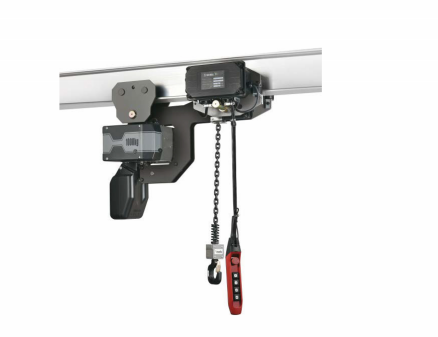
A control pendant is the handheld push button station an operator uses to start, stop, and steer a crane, hoist, or other powered lifting device from the floor. An "electric hoist pendant" is not a separate product family with different physics — it is the same device, specified for an electric hoist. The decision buyers actually need to make is therefore not pendant versus hoist pendant; it is which pendant specification fits which hoist control circuit, which working environment, and which set of operator functions.
This guide treats both terms as one product category — the control pendant station — and then shows how a wired 5-button pendant is matched to real equipment. Two Wilmall products anchor the discussion: the COP-5MSS-DD push button pendant, rated AC 500 V / 10 A with a 5-button layout and emergency stop, and the YJ02-02 electric chain hoist, whose control voltage range of 24-48 V defines what the pendant has to switch.
Wilmall (Wenzhou Mofan Electric Technology Co., Ltd.), established in 2025, manufactures industrial automation and power distribution components, with control pendant stations among its main products. The company operates as a manufacturer, supplier, wholesaler, and OEM/ODM factory; export business accounts for 80% of its total sales, with major markets including Pakistan, Korea, Australia, and Malaysia.
What "Control Pendant" and "Electric Hoist Pendant" Actually Mean
A control pendant is a cable-connected, handheld control station fitted with push buttons and, on industrial models, an emergency stop. The word "pendant" describes how the unit is used: it hangs from the machine or from a strain-relieved cable connection so the operator can hold it in one hand while watching the load. Wilmall's COP-5MSS-DD belongs to this control pendant station category and is classified as a push button pendant for industrial use.
"Electric hoist pendant" is a specification label rather than a category of its own. A buyer who writes "electric hoist pendant" on an inquiry normally means: a pendant control station that will be wired into an electric chain hoist, with the button layout and electrical rating that hoist requires. Both phrasings point to the same family of handheld station, and the COP-5MSS-DD is the reference model in the Wilmall range for that family.
Problem Definition: Why Pendant Selection Goes Wrong So Often
Most pendant selection failures are not electrical mysteries. They are mismatches between what a buyer assumes about the machine and what the machine's control circuit and environment actually require. Five mismatch patterns recur in industrial procurement.
- Confusing the pendant rating with the circuit voltage. The COP-5MSS-DD is rated AC 500 V and 10 A. That is a rating envelope, not the voltage at which every hoist runs. The YJ02-02 electric chain hoist, for example, has a rated voltage of 110-480 V and a control voltage of 24-48 V. Buyers who treat a high pendant rating as automatic proof of compatibility skip the step that matters most: confirming the control voltage of the circuit the pendant will switch.
- Ignoring the environment around the operator. The documented application scenario for this pendant calls for an IP65 protection rating, an ambient temperature range of -25 degrees C to +40 degrees C, and use at humidity up to 90% in an environment where rain intrusion is allowed. A pendant chosen without checking those conditions can be electrically correct and physically wrong.
- Under-specifying the function list. Button count and the emergency stop are the functions an operator depends on. The COP-5MSS-DD is a 5-button handheld station with an emergency stop, supporting multi-button manual push button operation. If the machine needs more commands than the layout provides, the pendant no longer matches the task.
- Skipping the standards question. Industrial pendant controllers are expected to comply with safety standards for low-voltage switchgear and controlgear, such as IEC 60947-5-1 and EN 60947-5-1. Compliance is a specification item, not paperwork to be handled after the order.
- Treating supply as an afterthought. Lead time, configuration repeatability, and the ability to reorder the same pendant later matter as much as first-unit performance — particularly for distributors building a stocked range.
Industry Background: The Scale and Direction of the Pendant Station Category
Third-party research places the global market for pendant crane control stations at approximately USD 275.60 million in 2025, with a projection of USD 423.80 million by 2032 and a compound annual growth rate of 5.1% (Future Data Matrix). North America is the leading region for pendant crane control stations, holding a 34.2% market share in 2025.
A second source values the global pendant control mechanical switch market at USD 722.5 million in 2025. That figure covers a broader mechanical switch category rather than crane control stations specifically, so the two numbers measure different scopes and should not be compared line by line; the difference reflects scope, not contradiction.
On the supply side, leading manufacturers in pendant control stations include Schneider Electric, Eaton, Siemens, ABB, and Rockwell Automation, according to the Global Push Button Pendant Control Station Market Research Report 2026. Schneider Electric held a 15% share of the low-voltage equipment market as of 2024 (Accio / Pestel-Analysis). Buyers therefore operate in a category with a well-established multinational supply tier alongside regional manufacturers — including Wilmall — that serve OEM/ODM and distributor demand.
Demand tracks the machines being controlled. The Wilmall YJ02-02 electric chain hoist is designed for high-end manufacturing industries including manufacturing, logistics, warehousing, construction, mining, metallurgy, port, nuclear, and aviation. Each of those settings needs a control point that an operator can physically reach and hold, which is why pendant stations remain a standard control method rather than a legacy one.
Detailed Solution: How a Wired 5-Button Pendant Sits in a Hoist Control Chain
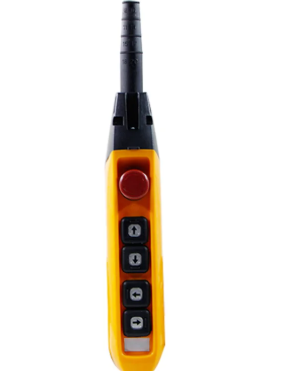
In a fixed installation, the control pendant is a discrete product with its own specification sheet. The COP-5MSS-DD is a 5-button handheld control station with an emergency stop; it supports multi-button push button operation, uses a plastic housing, and carries a rated current of 10 A at a rated voltage of AC 500 V. It is intended for the industrial hoist, crane, and mobile equipment control industry, and for crane, hoist, lifting equipment, and industrial control systems.
The electric chain hoist it is commonly paired with is the YJ02-02: rated capacity 2000 kg, lifting height 4 m, lifting speed 4 m/min, rated power 1.1 kW, rotation speed 1440 r/min, phases 3/2, rated voltage 110-480 V, control voltage 24-48 V, working rating M5, and net weight 45/48 kg. It is composed of a high-performance motor, a reducer, and a compact electronic control system.
The interface between the two products is the control circuit. Because the pendant is rated to AC 500 V and 10 A, a 24-48 V hoist control circuit falls inside that rating envelope; buyers should nevertheless confirm the actual control voltage and the switching duty with the supplier rather than assume compatibility from the rating alone.
How one command travels through a wired pendant
- The operator presses the corresponding button — for example up/down or forward/backward.
- The internal electrical contacts of that button close.
- A control signal is sent to the equipment control circuit.
- The control system — a contactor or drive — executes the corresponding action, and the equipment begins to move (for example, a crane travels or a load is lifted).
That sequence is the entire control philosophy of a wired pendant: a physical contact closure, a signal, an action. There is no pairing step and no radio link to establish, which is the structural reason a wired station is regarded as simple to operate and low-maintenance at the operator level.
The environmental envelope a buyer must respect
The documented application scenario for this pendant requires IP65 protection and is valid under defined conditions: ambient temperature from -25 degrees C to +40 degrees C; an average temperature of +40 degrees C with humidity up to 90% in an environment where rain intrusion is tolerated; and no explosive media and no media with sufficient corrosion to damage metal, rubber, or insulating gas or liquid. These are boundaries rather than promotional claims. A site outside them is a site where a standard pendant category may not be the right product, and where the correct move is to discuss the environment with the supplier instead of ordering a standard unit.
Step-by-Step Breakdown: Six Steps to Select a Pendant for an Electric Hoist
- Write down the function list. List every command the operator must issue — hoist up, hoist down, trolley forward, trolley reverse, travel, plus emergency stop. Compare that list with the layout of the candidate station. The COP-5MSS-DD provides a 5-button handheld layout with an emergency stop and multi-button operation; if the list is longer than the layout, the pendant is the wrong configuration before any electrical question is asked.
- Match the electrical rating to the control circuit. Identify the control voltage of the machine first, not the main voltage. The YJ02-02 runs on a rated voltage of 110-480 V but switches its commands at a control voltage of 24-48 V. The pendant's own rating — AC 500 V, 10 A for the COP-5MSS-DD — tells you the envelope it can handle, not the circuit it is installed on.
- Match the enclosure and protection to the environment. Confirm the required IP rating, the ambient temperature range, the humidity and rain exposure, and whether any explosive or corrosive media are present. The documented scenario for this pendant specifies IP65 with ambient conditions of -25 degrees C to +40 degrees C and up to 90% humidity, and excludes explosive media and corrosive gas or liquid.
- Confirm the control chain and installation interface. Agree how the station will be connected to the hoist panel and how the command path will be validated: button contacts close, a signal reaches the control circuit, and a contactor or drive executes the motion. This is the point to confirm cable arrangement, mounting, and who is responsible for commissioning.
- Verify standards and documentation. State the applicable standard up front — IEC 60947-5-1 and EN 60947-5-1 for low-voltage switchgear and controlgear — and request the supporting documentation you need for project approval. Wilmall states that its products comply with international certifications including CE, UL, and RoHS.
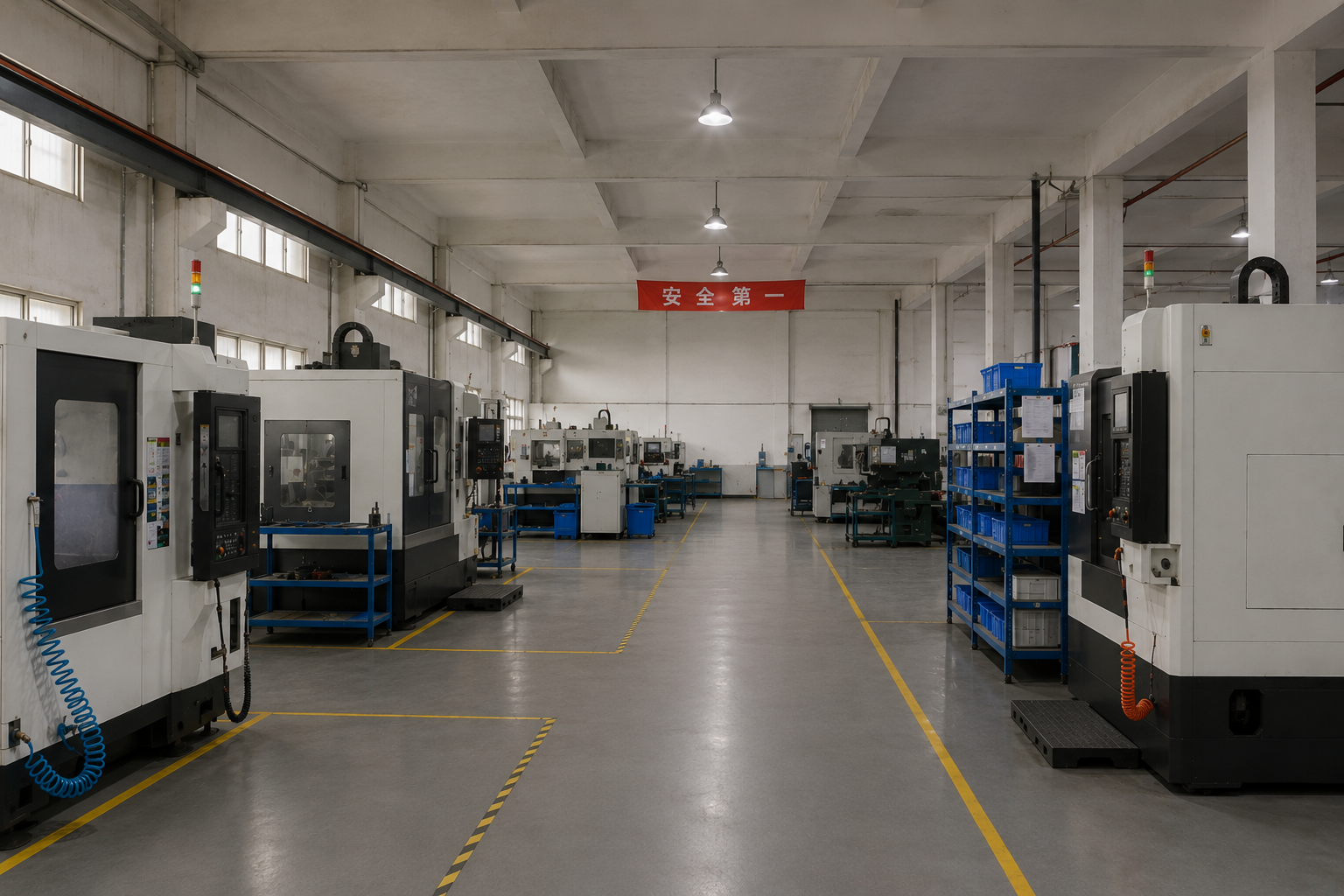
- Validate with a sample, then convert to a supply plan. Test one unit against your own hoist and environment before volume commitment, then lock the configuration and the commercial terms so that repeat orders arrive identical. Capacity and export experience are useful context here: Wilmall's facility covers 2000 square metres with an annual production capacity of 200,000 units.
Use Cases: Where a Wired Pendant Is the Right Answer
A wired 5-button pendant control station such as the COP-5MSS-DD fits the following situations, all supported by its documented application scope:
- Crane and hoist control. The station's primary intended application is crane and hoist control within the industrial hoist, crane, and mobile equipment control industry.
- Lifting equipment and industrial control systems. It is specified for lifting equipment and general industrial control systems where a handheld command point is needed near the load.
- Industrial automation projects. The matched application scenario covers managing industrial production equipment, construction machinery, or automation systems in the industrial automation industry.
- Heavy and process industries. Because the paired hoist is designed for manufacturing, logistics, warehousing, construction, mining, metallurgy, port, nuclear, and aviation, the pendant inherits those settings as its operating context.
- Region-specific deployments. The documented application scenario requiring an IP65 rating is common in Australia, which is consistent with Wilmall's stated export markets: Pakistan, Korea, Australia, and Malaysia.
Where the wired pendant is not the right answer. The documented conditions exclude explosive media and media with sufficient corrosion to damage metal, rubber, or insulation damage. Sites with those characteristics, or sites where operators must work at a long distance from the machine, call for a different control approach and should be discussed with the supplier rather than forced into a standard pendant specification.
Comparison Table: Control Methods and Reference Specifications
| Control method | How the command is transmitted | What is required on the machine | Typical fit | Maintenance character |
|---|---|---|---|---|
| Wired pendant control station (e.g. Wilmall COP-5MSS-DD) | Momentary push buttons close internal contacts in a handheld station connected by cable; the signal reaches the equipment control circuit and a contactor or drive executes the motion | A handheld station with the required button layout and emergency stop, plus a cable connection to the control panel | Cranes, hoists, lifting equipment, mobile equipment, industrial control systems | No battery and no radio receiver, so there is no battery replacement or re-pairing cycle to manage |
| Wireless radio remote | A handheld transmitter sends a radio signal to a receiver wired into the control panel | A receiver installed and powered on the machine, plus transmitter batteries | Applications where the operator must move freely or work far from the machine | Battery replacement and radio pairing become part of routine upkeep |
| Fixed or cab-mounted control station | Push buttons or levers on a panel fixed to the machine or inside an operator cab | Permanent panel mounting and a defined operator position | High-duty-cycle or cab-operated equipment where the operator stays in one place | Fewer handheld components, but no floor-level flexibility |
| Item | Control pendant COP-5MSS-DD | Electric chain hoist YJ02-02 |
|---|---|---|
| Category | Control pendant station / push button pendant, industrial use | Electric chain hoist |
| Layout or capacity | 5-button handheld station with emergency stop; multi-button manual control | Rated capacity 2000 kg; lifting height 4 m |
| Electrical rating | Rated voltage AC 500 V; rated current 10 A | Rated voltage 110-480 V; control voltage 24-48 V; phases 3/2 |
| Performance data | Manual push button operation | Lifting speed 4 m/min; rated power 1.1 kW; rotation speed 1440 r/min; working rating M5 |
| Housing or construction | Plastic housing | High-performance motor, reducer, and compact electronic control system |
| Weight | Not specified in published data | 45/48 kg net |
| Intended application | Crane, hoist, lifting equipment, industrial control systems, mobile equipment control | Manufacturing, logistics, warehousing, construction, mining, metallurgy, port, nuclear, aviation |
FAQ: Control Pendant Selection Questions Buyers Ask
Does a pendant control station have to comply with specific standards for industrial use?
Industrial pendant controllers are expected to comply with safety standards for low-voltage switchgear and controlgear, such as IEC 60947-5-1 and EN 60947-5-1. Wilmall states that its products comply with international certifications including CE, UL, and RoHS, which support global project requirements and safety standards. Buyers should confirm the specific standard and documentation set their own project requires before placing an order.
Can the same pendant model serve both a crane and an electric hoist?
Yes, within specification. The COP-5MSS-DD is intended for the industrial hoist, crane, and mobile equipment control industry as well as for crane, hoist, lifting equipment, and industrial control systems, and its documented matching equipment is a crane hoist. It is a 5-button handheld station with an emergency stop, rated AC 500 V and 10 A, with a plastic housing. The unit still has to be matched to the control voltage and switching duty of the specific machine it will command.
What drives the cost of a wired pendant compared with other control methods?
Cost is driven by configuration rather than by the label "control pendant". The variables are button count and layout, the electrical rating of the station, the housing and protection level the environment demands, and the compliance documentation the project needs. On the upkeep side, a wired pendant contains no radio receiver and no battery, so there is no battery replacement or re-pairing cycle to manage. Wilmall supplies factory-direct as a manufacturer, supplier, wholesaler, and OEM/ODM factory; exact pricing depends on the configuration and is confirmed at quotation.
Can a buyer test a pendant before committing to a volume order?
Sample validation is the normal next step before volume commitment. Buyers can request a sample or a quotation through Wilmall's contact channel — email sales@wilmall.com or WhatsApp +86 19730226757 — and check the button layout, the control voltage, and the protection level against their own hoist and site conditions. This is also the point to confirm installation and commissioning responsibilities.
How should buyers plan lead time and long-term supply?
Two production facts matter for planning. Wilmall's manufacturing facility covers 2000 square metres with an annual production capacity of 200,000 units, and export business accounts for 80% of total sales, with major markets including Pakistan, Korea, Australia, and Malaysia. Buyers should lock the configuration and confirm the lead time with the quotation rather than assume it, and keep the same model reference on repeat orders so that replacement units stay interchangeable. The product catalog can be downloaded from the Wilmall brochure link for reference before that conversation.
Conclusion: Match the Pendant to the Hoist, Not to the Label
"Control pendant" and "electric hoist pendant" describe the same device: a handheld push button station that gives an operator direct, physical control of a crane, hoist, or lifting machine. Selection comes down to four checks — the control voltage of the circuit, the button and emergency-stop functions required, the environmental envelope including the IP rating, and the standards and documentation the project must satisfy. The COP-5MSS-DD, rated AC 500 V / 10 A with a 5-button layout and emergency stop, and the YJ02-02 electric chain hoist with a 24-48 V control voltage, illustrate how a wired solution is matched in practice: simple command logic, no battery or radio link, and a specification that can be verified before the order is placed.
Wilmall (Wenzhou Mofan Electric Technology Co., Ltd.) supplies control pendant stations and industrial electrical components factory-direct to distributors, contractors, and OEM buyers.
Email: sales@wilmall.com | WhatsApp: +86 19730226757 | Website: wilmall.com
Download the product catalog: Wilmall brochure (PDF)

Have Questions or Need More Details?
Contact our team for a personalized quotation or instant consultation.
Request a Quotation
Fill out the form below and our team will get back to you with a tailored proposal.
WhatsApp Direct Chat
Prefer to chat in real-time? Message us on WhatsApp for instant assistance & quick answers.
- Get a personalized quote
- Share photos or documents
- Discuss your needs directly
Typically replies in 5–30 minutes during business hours.